
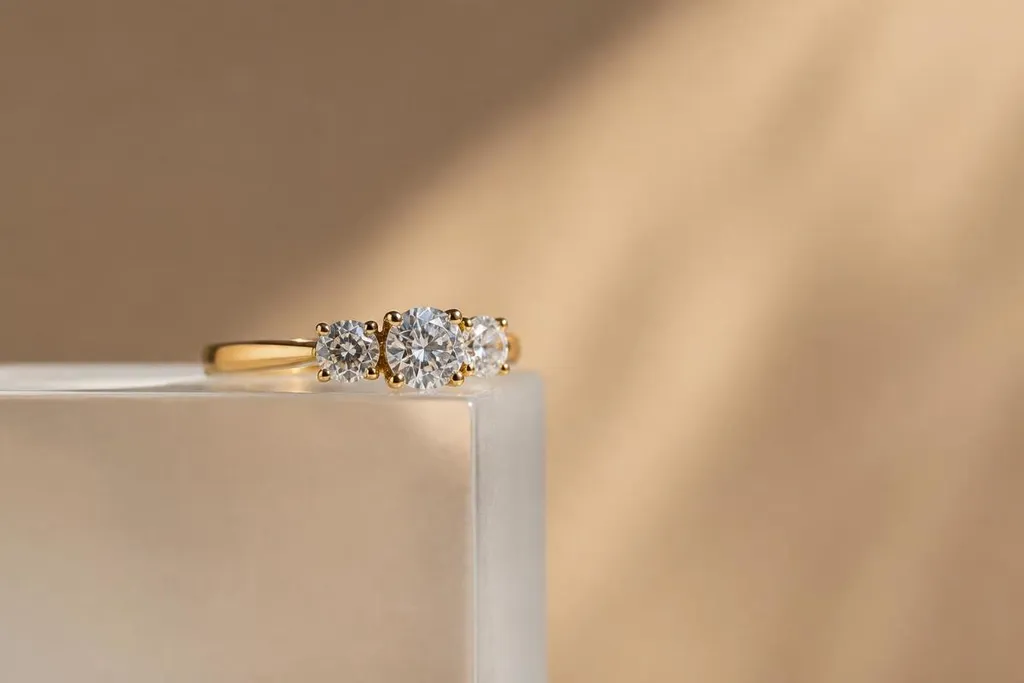
Personal jewellery should feel considered from every angle, not merely impressive in a photograph. A strong visual idea is most persuasive when comfort and longevity have shaped it too. At its best, the design uses three principal stones to create a naturally symbolic and visually balanced composition. That clear purpose offers more than a passing trend: it creates an aesthetic that can be adapted to personal taste without losing its essential character. The intended impression is polished, with a result that remains comfortable.
A relevant selection is discover lab diamond trilogy rings. Looking across complete designs makes it easier to judge scale, side profile and the relationship between the principal feature and the surrounding metalwork. It also places carat weight, dimensions and decorative detail in the context of a finished piece rather than a specification list. The intended impression is polished, with a result that remains comfortable.
What Gives the Design Its Character
What gives the design authority is the relationship between outline and detail. A diamond can look restrained in a solitaire, decorative in a halo or symbolic when arranged in a trilogy or eternity setting. The eye should understand the principal feature before moving naturally towards finer craftsmanship. That discipline keeps the composition polished rather than overstated, while supporting a piece that remains comfortable.
A second layer comes from the supporting materials and geometry. Balance cut, face-up dimensions, colour and clarity rather than pursuing a single headline grade; the most satisfying combination depends on the design. Gallery height, shoulder transition and the amount of visible metal decide whether the ring appears light, architectural or richly detailed from the side. This is why two pieces built around the same headline idea can produce very different moods: one may feel crisp and restrained, another warmer or more decorative, without either losing the design's identity. From every angle, the workmanship should look polished and feel comfortable.
Choosing Proportion, Materials, and Setting
Good comparison depends on looking at relationships rather than isolated details. Side stones can mirror the centre or introduce another cut, changing the design from formal symmetry to more expressive contrast. Photographs from above, profile views and measurements are more informative when considered together. Such comparison encourages a polished decision with a comfortable basis.
A well-resolved setting creates visual calm. The shoulders, galleries and stone heights should flow as one silhouette so the arrangement feels integrated rather than assembled. Even spacing, smooth finishing and a sensible distribution of weight help the piece feel intentional in the hand. The finished construction should appear polished and prove comfortable.
Making the Piece Work in Everyday Life
Everyday suitability depends on routine. Setting height, exposed edges and the way the band meets neighbouring fingers all influence whether the ring feels natural during ordinary movement. For regular wear, remove the ring during heavy manual work, store it separately and arrange professional checks if a claw catches or the setting begins to feel different. Those habits help a polished piece remain comfortable.
The design's relationship with other jewellery can reinforce its character. Trying the design beside a wedding band is worthwhile even before the band is chosen, as gallery shape and setting height influence how naturally another ring will sit. Similarity creates a calm, coordinated result, whereas deliberate contrast can make the principal piece feel even more distinctive. The wider collection can then feel polished, while this piece remains comfortable.
Final Thought
There is no single correct specification. What matters is that the principal idea remains clear, the supporting details feel proportionate and the construction suits the wearer's routine. A piece chosen on those terms does more than look impressive at the moment of purchase; it becomes easy to live with, easy to recognise as one's own and increasingly valuable in sentiment. Patient comparison is part of choosing well, not a delay. A short pause now can prevent a visually impressive but unsuitable choice. That is the difference between a merely attractive option and one that feels both polished and comfortable.